Service Request
 Sales Enquiry
 Customer Reviews
 Register for Updates
 Distributor Portal


Selecting the right water quality testing equipment is essential for laboratories that need reliable measurements, consistent results, and efficient testing workflows. Whether a laboratory analyses drinking water, groundwater, industrial process water, or wastewater, the choice of instruments directly affects testing accuracy, productivity, and quality control.
With several types of water testing instruments available, choosing the right equipment requires more than comparing specifications or prices. Laboratories must consider the parameters they need to measure, the analytical methods they follow, sample volume, measurement range, calibration requirements, and long-term operating costs.
This guide explains how to select water quality testing equipment based on your laboratory’s actual requirements and how to build a testing setup that supports reliable water analysis.
1. Identify the Water Quality Parameters You Need to Measure
The first step in choosing laboratory water testing equipment is identifying the parameters that need to be analysed. Different instruments are designed to measure different physical and chemical characteristics of water.
Common water quality parameters include:
- pH: Indicates whether water is acidic, neutral, or alkaline.
- Conductivity: Measures the ability of water to conduct electricity and helps assess the concentration of dissolved ionic substances.
- Total Dissolved Solids (TDS): Estimates the concentration of dissolved substances using an appropriate measurement method.
- Turbidity: Measures the cloudiness of water caused by suspended particles.
- Residual chlorine: Helps monitor disinfection processes in drinking water and treatment systems.
- Chemical Oxygen Demand (COD): Indicates the amount of oxygen equivalent required to chemically oxidise substances in a water sample.
- Biochemical Oxygen Demand (BOD): Measures the oxygen consumed by microorganisms while breaking down biodegradable organic matter under defined test conditions.
- Nitrate, phosphate, ammonia and other chemical parameters: Help assess water quality, pollution levels, and treatment performance.
Once the required parameters are identified, laboratories can shortlist the instruments and analytical methods suitable for their testing applications.
2. Understand the Different Types of Water Quality Testing Equipment
No single instrument can perform every type of water quality analysis. A laboratory may require several instruments depending on its workload and testing objectives.
pH and Conductivity Meters
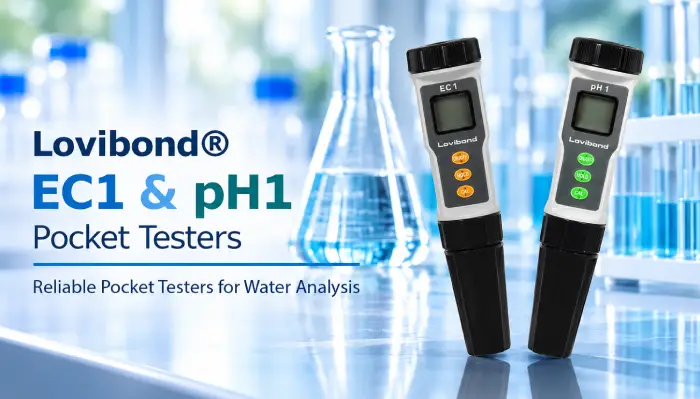
pH and conductivity meters are commonly used for routine water analysis. A pH meter measures the acidity or alkalinity of a sample, while a conductivity meter measures its electrical conductivity.
Depending on the instrument, additional measurements may include temperature, TDS, salinity, and oxidation-reduction potential (ORP).
These instruments are useful for laboratories, water treatment facilities, industrial process monitoring, and field testing teams.
Photometers
Photometers measure light absorption to determine the concentration of specific substances in a sample using a suitable analytical method.
They are useful for routine chemical water testing, including selected chlorine, nutrient, and other parameter tests, when the instrument and method support the required measurement range.
When selecting a photometer, check the available testing methods, reagent compatibility, measurement range, and the number of parameters your laboratory regularly analyses.
Spectrophotometers
Spectrophotometers measure light absorption across selected wavelengths and can support a wider range of laboratory analyses, depending on the instrument’s optical capabilities and validated methods.
For laboratories that require flexibility across multiple water quality parameters, a spectrophotometer may be a suitable option.
Lovibond® offers the XD7000 VIS and XD7500 UV-Vis spectrophotometers for water quality analysis. The choice between VIS and UV-Vis should depend on the wavelengths, analytical methods, and applications required by the laboratory.
Turbidity Meters
Turbidity meters measure the cloudiness of water caused by suspended particles. They are used in drinking water treatment, environmental monitoring, wastewater analysis, and other applications where turbidity is an important indicator.
When choosing a turbidity meter, consider its measurement range, detection capability, optical measurement method, calibration requirements, and suitability for your samples.
Water Testing Kits
Water testing kits combine selected testing materials and methods in a convenient format. They can be useful for laboratories that need to perform specific tests, as well as teams working at multiple sampling locations.
The appropriate kit depends on the parameters to be measured, the required accuracy, testing frequency, and whether testing takes place in the laboratory or in the field.
Explore Lovibond® water quality analysis solutions to understand the available instrument categories and testing options.
3. Match the Instrument to Your Laboratory Application
Different laboratories have different testing priorities. The right equipment should match the type of samples being analysed and the decisions that depend on the results.
| Laboratory application | Common testing requirements | Equipment to consider |
| Drinking water analysis | pH, turbidity, chlorine, nitrate and other relevant parameters | pH meters, turbidity meters, photometers and suitable test kits |
| Wastewater analysis | COD, BOD, pH, ammonia and phosphate | Photometers, COD testing systems, BOD equipment and pH meters |
| Industrial process water | pH, conductivity, TDS and application-specific parameters | Electrochemistry meters and suitable photometric instruments |
| Environmental monitoring | Turbidity, pH, conductivity and selected chemical parameters | Portable meters, field kits and laboratory instruments |
| Research and analytical laboratories | Multiple chemical parameters requiring defined analytical methods | Spectrophotometers and specialised analytical instruments |
These are general equipment recommendations. The final selection should be based on the required analytical method, sample characteristics, measurement range, and applicable standards.
4. Check Accuracy, Precision and Measurement Range
Instrument specifications should be evaluated against the laboratory’s actual testing requirements.
Accuracy describes how close a measurement is to the accepted reference value. Precision describes how closely repeated measurements agree with one another.
Both are important when analysing water samples, especially when small changes in concentration can influence quality control decisions.
Before purchasing water quality testing equipment, evaluate:
- The minimum and maximum measurement range.
- The instrument’s stated accuracy and repeatability.
- Resolution and detection capability.
- Potential interferences from the sample matrix.
- Compatibility with the required analytical method.
- Calibration and verification procedures.
For example, a laboratory testing samples with very low concentrations of a particular substance may require different measurement capabilities from a facility conducting routine process checks at higher concentrations.
Always confirm that the instrument’s specifications are suitable for the expected sample concentrations and the method being used.
5. Evaluate Analytical Methods and Reagent Compatibility
An instrument alone does not guarantee reliable analytical results. The associated testing method, reagents, sample preparation, and quality control procedures are equally important.
Before selecting equipment, verify whether the instrument supports the methods required for your application. Check the availability of compatible reagents, standards, cuvettes, accessories, and method documentation.
For photometric analysis, reagent compatibility and correct test procedures are particularly important. Different chemical parameters may require different reagents, reaction times, wavelengths, and sample preparation steps.
Laboratories should also consider:
- Whether the analytical method is appropriate for the sample type.
- Whether the required method is recognised by the relevant regulatory or industry framework.
- Whether interferences and detection limits are documented.
- Whether suitable reference standards and quality control materials are available.
The Lovibond® Handbook of Methods provides method information and testing guidance for supported photometric applications.
For regulatory testing, confirm the current applicable BIS, CPCB, ISO, or other relevant method requirements rather than assuming that every instrument or method meets every standard.
6. Consider Calibration and Quality Control Requirements
Regular calibration and performance verification help laboratories maintain confidence in their measurement results.
The calibration process varies by instrument type. A pH meter, for example, typically requires suitable pH buffer solutions, while photometric instruments may require method-specific checks and appropriate reference standards.
Before purchasing equipment, understand the manufacturer’s recommended procedures for calibration, verification, maintenance, and documentation.
Important considerations include:
- Availability of suitable calibration standards and buffer solutions.
- Ease of performing routine performance checks.
- Availability of maintenance instructions and technical support.
- Ability to document calibration and verification activities.
- Traceability requirements applicable to your laboratory.
For laboratories using pH measurement equipment, suitable Lovibond® standards and solutions can be considered when selecting the required calibration materials.
Calibration frequency should be determined by the manufacturer’s guidance, method requirements, usage conditions, and the laboratory’s quality management procedures.
7. Assess Data Management and Reporting Features
Modern laboratories may need to maintain measurement records for internal quality control, audits, customer reporting, and regulatory documentation.
In these situations, data management features can be an important part of equipment selection.
Depending on the laboratory’s workflow, useful features may include:
- Internal storage of measurement results.
- Date and time stamps.
- User identification and access controls.
- Data export through supported interfaces.
- Compatibility with laboratory information management systems (LIMS), where required.
- Clear and consistent reporting formats.
Before purchasing, confirm that the instrument’s data handling capabilities match your laboratory’s documentation and record-retention requirements.
8. Compare Total Cost of Ownership, Not Just Purchase Price
The initial purchase price is only one part of the total cost of laboratory water testing equipment.
Long-term expenses can include reagents, standards, consumables, accessories, maintenance, calibration, staff training, and instrument downtime.
A lower-cost instrument may not be the most economical choice if it cannot support the necessary testing methods or requires frequent additional purchases.
When comparing instruments, consider:
- Initial equipment cost.
- Recurring reagent and consumable costs.
- Availability of replacement parts and technical support.
- Maintenance and calibration expenses.
- Training requirements and ease of operation.
- Expected testing volume and instrument utilisation.
This approach helps laboratories select equipment that offers practical value over its useful operating life.
9. Review Instrument Reliability, Support and Training
Reliable laboratory operations depend on more than the instrument’s technical specifications. Access to product documentation, application guidance, training, and after-sales support can also influence day-to-day performance.
Before making a purchase, check the availability of operating manuals, analytical method instructions, maintenance guidance, reagent supplies, and technical assistance.
For laboratories using specialised instruments, staff training is particularly important. Correct sample preparation, instrument operation, cleaning, calibration, and result interpretation help reduce avoidable errors.
Choosing equipment supported by a suitable service and consumables network can help maintain continuity in routine testing operations.
10. Build a Water Testing Setup Around Your Requirements
The best laboratory setup is not necessarily the one with the largest number of instruments. It is the setup that covers the required parameters with appropriate measurement capability, reliable methods, and manageable operating costs.
For example, a laboratory conducting routine pH and conductivity checks may begin with suitable electrochemistry meters. A facility analysing several chemical parameters may also need a photometer or spectrophotometer, compatible reagents, and relevant reference materials.
For more specialised testing, additional instruments may be necessary.
Lovibond® provides water analysis solutions across instrument categories, including electrochemistry meters, photometers, spectrophotometers, turbidity measurement equipment, reagents, and water testing kits. Explore the Lovibond® water testing equipment range to identify options relevant to your laboratory.
Frequently Asked Questions
1. What is the best water quality testing equipment for a laboratory?
The best equipment depends on the parameters being tested, sample types, measurement ranges, required analytical methods, and testing volume. A laboratory may need pH and conductivity meters, turbidity meters, photometers, spectrophotometers, or a combination of these instruments.
2. What is the difference between a photometer and a spectrophotometer?
A photometer measures light intensity at selected wavelengths for specific analytical applications. A spectrophotometer can measure absorbance across a range of wavelengths, depending on its design. The appropriate choice depends on the required methods, parameters, measurement ranges, and flexibility needed.
3. How do I choose water testing equipment for wastewater analysis?
Start by identifying the wastewater parameters you need to monitor, such as pH, COD, BOD, ammonia, phosphate, or turbidity. Then select instruments and analytical methods that support those parameters and meet the relevant measurement and compliance requirements.
4. Why is calibration important for water quality testing instruments?
Calibration helps establish the relationship between instrument readings and reference values. Combined with suitable verification and quality control procedures, it helps laboratories identify measurement deviations and maintain reliable results.
5. What should I check before purchasing laboratory water testing equipment?
Check the required parameters, measurement range, accuracy, analytical methods, reagent availability, calibration needs, data management features, maintenance requirements, and long-term operating costs. Also confirm that the equipment is suitable for your sample types and applicable testing standards.
Conclusion
Choosing the right water quality testing equipment starts with understanding what your laboratory needs to measure and how the results will be used. Evaluating instrument capabilities, analytical methods, calibration requirements, data management, and operating costs helps laboratories make informed purchasing decisions.
A carefully selected combination of instruments, reagents, and quality control materials can support consistent water analysis across routine laboratory testing, industrial monitoring, and environmental applications.
Lovibond® offers a range of water analysis instruments and testing solutions for laboratories and industries. Explore the Lovibond® water quality analysis range to learn more about available solutions for your testing requirements.